Guide · Updated November 2026
Automatic Gate Safety: The Law in Plain English
In the UK a powered gate or barrier is legally a machine. The installer must make it safe and certify it, and the owner, landlord or managing agent must keep it safe. BS EN 12453 sets the safety level, including a 400 N limit on crushing force.
- UK-wide
- All makes repaired
- Safety tested & certified
Who is responsible
Three parties. The installer, who must supply a safe, certified machine. The owner or person in control of the premises, who must keep it maintained. And any maintenance company, which must not leave a gate in a dangerous state. For rented and shared property this means landlords and managing agents.
The laws that apply
- Supply of Machinery (Safety) Regulations 2008: new and newly automated gates must be safe, documented and UKCA or CE marked
- Health and Safety at Work etc. Act 1974: duties to employees and to the public
- Workplace (Health, Safety and Welfare) Regulations 1992: powered doors and gates at work need safety features
- PUWER 1998: work equipment must be maintained
- Occupiers' Liability Acts and landlord duties for homes and shared entrances
What BS EN 12453 requires
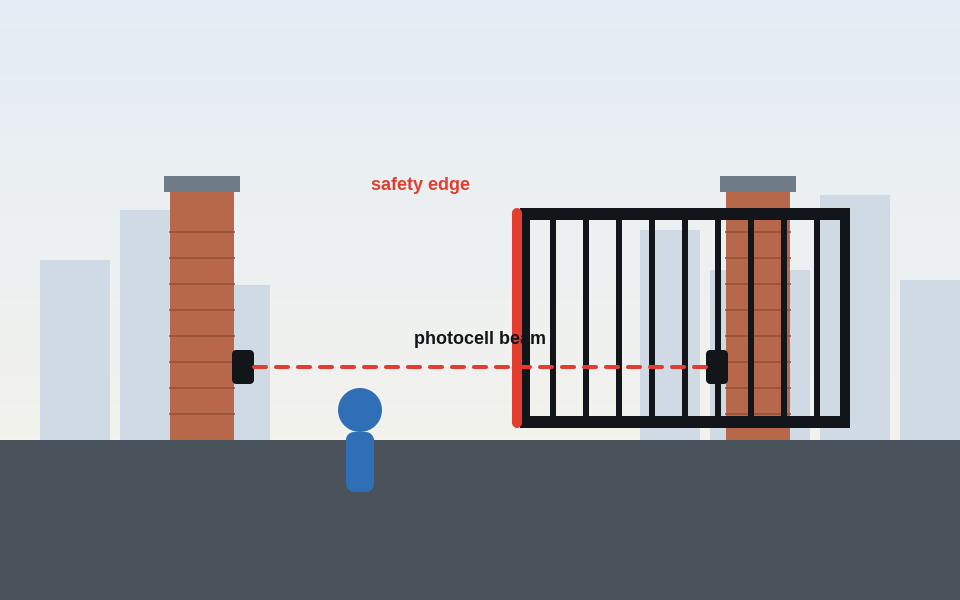
The standard gives three ways to protect each dangerous edge: hold-to-run control, limiting the force the gate can apply, or detecting a person before contact. Where force limitation is used the gate must not exceed 400 N at crush points or 1,400 N elsewhere, and the force must fall to 150 N within three quarters of a second.
The hazards an inspection looks for
- Crushing at the closing edge
- Crushing between a sliding gate and its posts or run-back fence
- Shearing and drawing-in at hinges and through railings
- Gates that can fall if a hinge or stop fails
- Impact with a person in the swing area
- Missing or bypassed safety devices
What you should have on file
- Declaration of conformity
- Risk assessment
- Force test results
- User instructions including manual release
- Maintenance log with dated service records
What to do if you have none of that
Book a safety inspection and force test. It tells you where the gate stands, what must be done and gives you the start of a proper record. Most older gates can be brought up to standard for far less than replacing them.
Related products
Safety Edges & PhotocellsThe devices that stop a gate or barrier hurting someone. Fitted, tested and certified.Find out more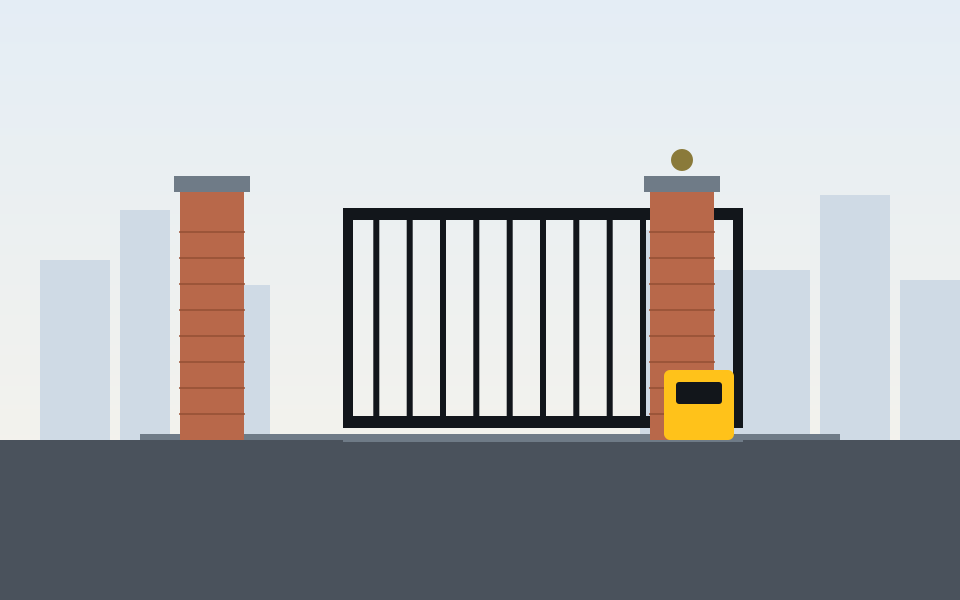 Sliding GatesAutomatic sliding gates and motors for driveways, yards and commercial entrances.Find out more
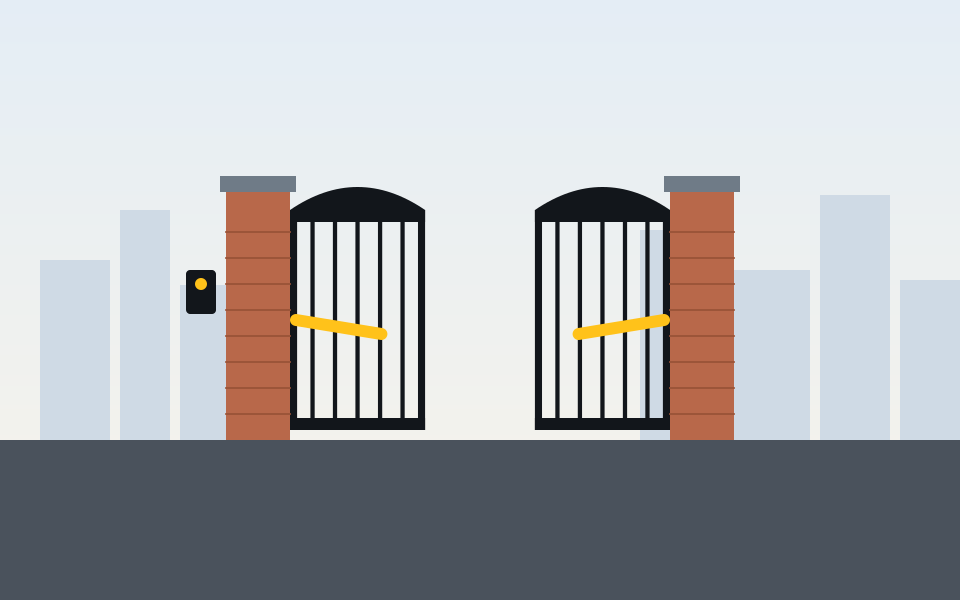 Swing GatesAutomated single and double swing gates for driveways, estates and commercial entrances.Find out more
 Bi-Folding GatesFast-acting folding gates for secure sites with no room to swing or slide.Find out more
Questions we get asked
Does this apply to gates at private homes?
The supply law applies to whoever installs it. A homeowner has a general duty of care to visitors, postal workers and neighbours' children, so a safe gate matters at home too.
Do barriers fall under the same rules?
Yes. Traffic barriers are covered by BS EN 12453 in the same way as gates.
Is a yearly service enough?
For a home, usually. Shared and commercial gates should be checked every six months.
Get a free survey and fixed quote
Tell us what the entrance is and what you want it to do. A photo and a rough width is enough to start.